Resources

Newly Added

Greentruth MCP is now available.

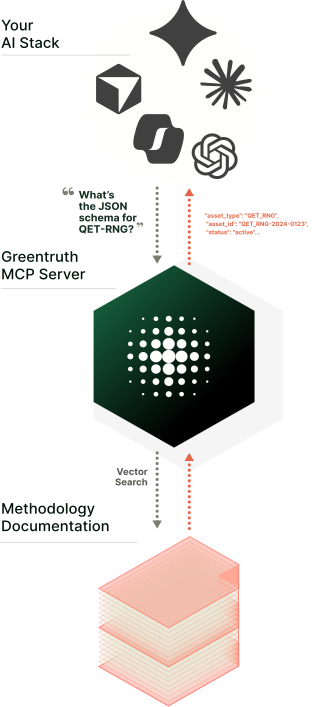
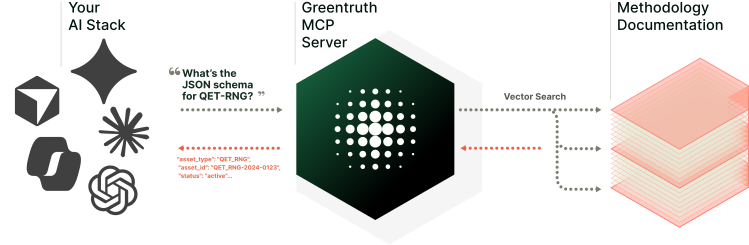
MCP provides secure server access to our documentation, enabling organizations to reference, validate, and integrate Greentruth standards directly into their internal processes. Connect your AI stack to query requirements, retrieve guidance, and generate JSON outputs conform to Greentruth specifications.
MCP

No static PDFs. No version confusion.
Just current, authoritative guidance.
Request MCP Access
Governance
Methodologies
Guides
Case Studies
Governance Framework

EarnDLT Platform and Greentruth Marketplace (GTM) Program Governance Framework & Registry Operating Procedures

This Governance Framework sets the principles, requirements, and procedures for environmental certificate programs on EarnDLT and Greentruth (GTM). It ensures environmental integrity and regulatory compliance in accordance with ISO 14064-3:2019, ISO 14065:2020, and ISO/IEC 17029:2019.

Preview the governance document >
Greentruth logo

Document Preview

Limited preview available

Guide 1
Using QET-RNG for SBTi Target Achievement

Quick Start Guide for Corporate Buyers

This guide explains how QET-RNG certificates allow companies to use renewable natural gas procurement to achieve SBTi emissions reduction targets.

It shows that RNG substitution reduces Scope 1 fossil emissions and improves Scope 3 lifecycle emissions using ISO 14064-3 verified data, not offsets. It also outlines the required certificate types, calculations, and reporting steps to ensure compliant SBTi disclosure and alignment.

Guide cover

What is SBTi and Why Does RNG Matter?

What is SBTi and Why Does RNG Matter?
The Science Based Targets initiative (SBTi) validates corporate emission reduction targets aligned with limiting global warming to 1.5°C. Over 4,000 companies globally have committed to SBTi-validated targets.

QET-RNG certificates enable you to:

  • Reduce Scope 1 fossil CO₂ emissions (counts toward SBTi target achievement)
  • Improve Scope 3 Category 3 fuel lifecycle emissions (counts toward SBTi Scope 3 targets)
  • Document fuel substitution with ISO 14064-3 verified data (meets SBTi Recommendation R3 for biofuel certification)

Contents

  1. 1. What is SBTi and Why Does RNG Matter?2
  2. 2. How QET-RNG Supports Your SBTi Target3
  3. 3. Claiming RNG for SBTi Targets (Step-by-Step)4
  4. 4. SBTi Validation & Verification7
  5. 5. Common Questions (FAQ)7
  6. 6. Compliance Checklist9
  7. 7. Resources & References9

Continue Reading

You've reached the end of the preview.

Please fill out the form to download the guide.

Greentruth logo

Document Preview

Limited preview available

Guide 2
CDP Reporting with QET-RNG Certificates

Question-by-Question Mapping for CDP Full Corporate Questionnaire (2025)

This guide explains how QET-RNG certificates allow companies to use renewable natural gas procurement to achieve SBTi emissions reduction targets.

It shows that RNG substitution reduces Scope 1 fossil emissions and improves Scope 3 lifecycle emissions using ISO 14064-3 verified data, not offsets. It also outlines the required certificate types, calculations, and reporting steps to ensure compliant SBTi disclosure and alignment.

Guide cover

Overview: Why QET-RNG Matters for CDP

CDP (Carbon Disclosure Project) is the world's largest corporate environmental disclosure platform. Over 23,000 companies report annually to CDP, serving over 700 institutional capital markets signatories with combined assets of US$142 trillion and 330+ major purchasers with over US$6.4 trillion in procurement spend.

About the 2025 Questionnaire: Since 2024, CDP has integrated its previously separate climate change, forests, and water security questionnaires into a single CDP Full Corporate Questionnaire with 13 modules. This guide covers the climate-change-relevant questions.

QET-RNG certificates provide verified data for:

  • Scope 1 emissions reporting
  • Biogenic CO2 disclosure
  • Scope 3 Category 3 fuel lifecycle emissions
  • Climate strategy and transition planning

CDP Scoring Impact:
CDP Scoring Impact: Complete, verified renewable fuel reporting enhances your CDP score in the Emissions question area (C6-C8), Scope 3 reporting (C8.2), and Verification (C10) scoring sections.

Contents

  1. 1. Overview: Why QET-RNG Matters for CDP2
  2. 2. CDP Question-by-Question Guide3
  3. 3. CDP Sector-Specific Questions12
  4. 4. Documentation to Maintain for CDP Verification14
  5. 5. CDP Scoring Opportunities15
  6. 6. Resources15

Continue Reading

You've reached the end of the preview.

Please fill out the form to download the guide.

Greentruth logo

Document Preview

Limited preview available

Guide 3
TCR Reporting Checklist for QET-RNG

Step-by-Step Compliance Guide for The Climate Registry

This guide explains how QET-RNG certificates allow companies to use renewable natural gas procurement to achieve SBTi emissions reduction targets.

It shows that RNG substitution reduces Scope 1 fossil emissions and improves Scope 3 lifecycle emissions using ISO 14064-3 verified data, not offsets.

Guide cover

What is The Climate Registry (TCR)?

The Climate Registry is a North American nonprofit that designs and operates voluntary and compliance GHG reporting programs.

TCR members include:

  • Corporations (voluntary reporting)
  • U.S. states & Canadian provinces (compliance programs) Tribal nations
  • Municipalities

TCR General Reporting Protocol (GRP) V3.0 sets standards for GHG accounting, including eligibility criteria for renewable fuel contractual instruments.

QET-RNG Eligibility for TCR Reporting

Fuel Attribute Documentation Certificates satisfy all 7 TCR Steam and Heating Eligibility Criteria (GRP Advanced Methods Module, Section D-15) and the QET-RNG physical delivery best-practice standard.

Production Documentation Certificates do NOT meet the QET-RNG physical delivery standard and should not be used to apply market-based emission factors for biogenic CO2 or Scope 1 CH4/N2O reporting under GRP Section D-7.

Contents

  1. 1. What is The Climate Registry (TCR)?2
  2. 2. QET-RNG Eligibility for TCR Reporting2
  3. 3. Step-by-Step Compliance Checklist3
  4. 4. GHG Inventory Calculation4
  5. 5. TCR CRIS Reporting6
  6. 6. Documentation Upload Requirements8
  7. 7. Third-Party Verification9
  8. 8. Public Reporting & Transparency10
  9. 9. Annual Maintenance11
  10. 10. Sector-Specific Considerations12
  11. 11. Compliance Summary Table13
  12. 12. Common Mistakes to Avoid14
  13. 13. Resources & Contacts15

Continue Reading

You've reached the end of the preview.

Please fill out the form to download the guide.

Greentruth logo

Document Preview

Limited preview available

Methodology for the Production and Verification of Natural Gass Quantified Emissions Tokens® (QETs) in Accordance with ISO 14064-3

This comprehensive methodology document outlines a verifiable framework for the production of Quantified Emissions Tokens® (QETs) that is aligned with ISO 14064-3 verification requirements. The methodology establishes standardized processes for quantifying emissions factors while remaining agnostic to specific measurement methodologies employed by producers of natural gas and other commodities.
Methodology cover

Introduction and Scope

The Quantified Emissions Token (QET) serves as a digital container for verified environmental attributes and emissions data collected from real-world commodities. This methodology document provides the procedural framework for creating, validating, and verifying QETs that represent the environmental impacts of physical commodities, with particular focus on natural gas production, processing, transmission, and distribution.

This methodology is designed to be compatible with and verifiable under ISO 14064-3 standards for greenhouse gas assertions, while incorporating the principles of ISO 14067 for product carbon footprinting. It establishes the requirements for QET production regardless of the specific measurement technology or approach used by the producer, so long as the measurement methodology meets the minimum requirements for data quality, uncertainty management, and verification.

Contents

  1. 1. Key Objectives11
  2. 2. Normative References11
  3. 3. Terms and Definitions12
  4. 4. General Requirements for QET Production15
  5. 5. Quantification Methodology for QET Production18
  6. 6. Uncertainty Reporting Requirements35
  7. 7. QET Data Structure and Required Fields40
  8. 8. Verification and Validation Requirements86
  9. 9. QET Lifecycle Management117
  10. 10. Competence Requirements for QET Validators and Verifiers 124
  11. 11. Independent Review Process131
  12. 12. Site Visit Requirements for QET Verification134
  13. 12. Facts Discovered After Verification144
  14. 12. Processing Operations - QET Implementation Guidance 148
  15. 12. Roles, Responsibilities, and Workflow in QET Production 158
  16. 12. Appendix A: Transportation QET Implementation Guidance 165
  17. 12. Appendix B: Processing Ops QET Implementation Guidance 165
  18. 12. References172
  19. 12. Citations172

Continue Reading

You've reached the end of the preview.

Step 1 of 2

Create an account or log in to access the full methodology document.

Greentruth logo

Document Preview

Limited preview available

Methodology for the Production and Verification of Low Carbon Fuel Standard Quantified Emissions Tokens® (QET-LCFS) in Accordance with ISO 14064-3

This methodology defines procedures for producing and verifying QET-LCFS for California LCFS compliance, extending the core QET framework to incorporate LCFS-specific carbon intensity, fuel pathway, and CARB verification requirements.
Methodology cover

Introduction and Scope

The QET-LCFS methodology establishes a comprehensive framework for producing verified emissions tokens that meet California's Low Carbon Fuel Standard (LCFS) requirements. This methodology extends the core QET framework while incorporating specific requirements for carbon intensity calculation, fuel pathway certification, and CARB verification processes.

This document provides the procedures necessary for tracking and verifying the carbon intensity of transportation fuels throughout their lifecycle, ensuring compliance with California Air Resources Board (CARB) regulations while maintaining compatibility with ISO 14064-3 verification standards.

Contents

  1. Executive Summary1
  2. 1. Key Objectives1
  3. 2. Normative References1
  4. 3. Terms and Definitions2
  5. 4. General Requirements for QET-LCFS Production 3
  6. 5. LCFS-Specific Quantification Methodology 4
  7. 6. QET-LCFS Data Structure and Required Fields 5
  8. 7. Verification and Validation Requirements for QET-LCFS 7
  9. 8. LCFS Credit Generation and Reporting 8
  10. 9. Monitoring and Continuous Improvement 9
  11. 10. Implementation Timeline and Compliance 9
  12. Conclusion11

Continue Reading

You've reached the end of the preview.

Step 1 of 2

Create an account or log in to access the full methodology document.

Greentruth logo

Document Preview

Limited preview available

EarnDLT Platform and Greentruth Marketplace (GTM) Program Governance Framework & Registry Operating Procedures

This Governance Framework sets the principles, requirements, and procedures for environmental certificate programs on EarnDLT and Greentruth (GTM). It ensures environmental integrity and regulatory compliance in accordance with ISO 14064-3:2019, ISO 14065:2020, and ISO/IEC 17029:2019.

Governance cover

Purpose and Scope

This Governance Framework defines the principles, requirements, and procedures governing environmental certificate programs operated on the EarnDLT Platform and Greentruth Marketplace (GTM). It applies to all Quantified Emissions Tokens (QETs) and Environmental Impact Assets issued through the EarnDLT registry—including energy-based, mass-based, and electrical QETs; sectoral compliance instruments such as LCFS and RFS attributes; carbon removal and sequestration certificates; and third-party environmental programs administered on the platform. The Framework ensures environmental integrity and regulatory compliance in alignment with ISO 14064-3:2019, ISO 14065:2020, and ISO/IEC 17029:2019.

Governance is executed through documented procedures and clearly assigned decision-making authority rather than standing committees, enabling operational agility while maintaining ISO-compliant oversight. The Framework applies to programs owned by Earn and GTM, as well as third-party programs administered on the platform under defined onboarding and approval requirements, and may evolve to formal governance bodies as platform complexity increases.


Prepared as an ISO 14065:2020, ISO 14064-3:2019, and ISO/IEC 17029:2019 Compliant Governance Framework for Environmental Certificate Programs

The information contained in this document is intended solely for authorized recipients and may be legally privileged. Any unauthorized review, use, disclosure, or distribution is prohibited. Nothing contained herein shall be construed as providing legal, financial, or technical advice. Earn DLT, Inc. makes no warranties, express or implied, regarding the accuracy, completeness, or fitness for a particular purpose of the information contained herein.

No part of this document may be reproduced, distributed to third parties, in whole or in part, without the express written permission of Earn DLT, Inc. The methodology described herein, including the Quantified Emissions Token® (QET) framework, is the intellectual property of Earn DLT, Inc. and is subject to patent and/or other intellectual property protections.

© 2025 Earn DLT, Inc. All rights reserved. This document contains proprietary and confidential information of Earn DLT, Inc. and is protected by copyright law. The Earn logo is a registered trademark of Earn DLT, Inc.

Contents

  1. 1. Purpose, Scope, and Definitions9
  2. 2. Governance Architecture for Programs on the Platform14
  3. 3. Program Onboarding and Approval24
  4. 4. Common Principles and Minimum Standards for All Programs34
  5. 5. Program Schedules (Program-Specific Annexes)49
  6. 6. Registry Services and Interface with Programs55
  7. 7. Roles and Responsibilities – EarnDLT/GTM vs Program Owner72
  8. 8. Risk Management and Oversight Across Programs83
  9. 9. Complaints, Appeals, and Dispute Resolution88
  10. 10. Transparency, Engagement, and Market Communication95
  11. 11. Amendments, Versioning, and Transitional Provisions101
  12. 12. Legal and Contractual Relationships105

Continue Reading

You've reached the end of the preview.

Please fill out the form to download the case study.

Greentruth logo

Document Preview

Limited preview available

Methodology for the Production and Verification of Ethanol Quantified Emissions Tokens® (QET-Ethanol) in Accordance with ISO 14064-3

This methodology extends the core QET framework to ethanol production, addressing process-specific characteristics including biological fermentation, synthetic production pathways, and diverse feedstock sources.
Methodology cover

Introduction and Scope

The QET-Ethanol methodology provides a specialized framework for quantifying and verifying emissions associated with ethanol production. This methodology addresses the unique characteristics of ethanol manufacturing, including biological fermentation processes, diverse feedstock options, and both conventional and advanced production pathways.

This document establishes requirements for tracking emissions throughout the ethanol production lifecycle, from feedstock cultivation and processing through fermentation, distillation, and distribution, while maintaining compliance with ISO 14064-3 verification standards.

Contents

  1. 1. Scope9
  2. 2. Normative References11
  3. 3. Terms and Definitions13
  4. 4. General Requirements for QET-Ethanol Production 16
  5. 5. Quantification Methodology for QET-Ethanol Production 21
  6. 6. Uncertainty Reporting Requirements 38
  7. 7. QET-Ethanol Data Structure and Required Fields 40
  8. 8. Verification and Validation Requirements 52
  9. 9. Reporting and Communication 59
  10. 10. Competence Requirements for Validators and Verifiers 63
  11. 11. Independent Review Process 67
  12. 12. Site Visit Requirements 69
  13. 13. Facts Discovered After Verification 73
  14. 14. Roles, Responsibilities, and Workflow in QET-Ethanol Production 76
  15. 15. Appendices 86
  16. Appendix A: Complete JSON Schema Example 86

Continue Reading

You've reached the end of the preview.

Step 1 of 2

Create an account or log in to access the full methodology document.

Greentruth logo

Document Preview

Limited preview available

Methodology for the Production and Verification of Carbon Capture and Sequestration Quantified Emissions Tokens® (QET-CCS) — kgCO₂e Removed

This methodology extends the core QET framework to ethanol production, addressing process-specific characteristics including biological fermentation, synthetic production pathways, and diverse feedstock sources.

Methodology cover

Introduction and Scope

The QET-CCS methodology establishes a comprehensive framework for quantifying, verifying, and tokenizing carbon dioxide removal through capture and sequestration technologies. Each QET-CCS token represents one kilogram of CO₂ equivalent permanently removed from the atmosphere and securely stored in geological formations.

This methodology addresses the complete CCS value chain, from carbon capture at emission sources through transportation and injection into geological storage sites, ensuring permanent sequestration and providing immutable verification through the EarnDLT registry system.

Contents

  1. Executive Summary1
  2. Table of Contents2
  3. 1. Introduction and Scope7
  4. 2. Normative References8
  5. 3. Terms and Definitions9
  6. 4. System Boundaries and Scope12
  7. 5. Eligible Carbon Capture and Sequestration Methodologies 13
  8. 6. Quantification Methodology17
  9. 7. Buffer Pool Administration and Reversal Risk Management 21
  10. 8. Data Requirements and Quality Assurance 24
  11. 9. Uncertainty Reporting Requirements 26
  12. 10. Verification Requirements30
  13. 11. QET-CCS Data Structure and JSON Schema 34
  14. 12. Documentation and Attestation Requirements 36
  15. 13. Permanence Monitoring and Reporting 38
  16. 14. Integration with EarnDLT Registry and Transparency Requirements 44
  17. 15. Pricing Structure and Fee Administration 47
  18. 16. Quality Assurance and Control 52
  19. 17. Roles, Responsibilities, and Workflow 55
  20. Appendix A: Glossary of Terms61
  21. Appendix B: Reference Documents and Resources 61

Continue Reading

You've reached the end of the preview.

Step 1 of 2

Create an account or log in to access the full methodology document.

Greentruth logo

Document Preview

Limited preview available

Methodology for the Production and Verification of Solid Fuel Thermal Quantified Emissions Tokens (QET-SOL) — kgCO₂e/MMBtu

This methodology defines procedures for producing, quantifying, disclosing, and verifying QET-SOL, with GHG intensity standardized to kgCO₂e/MMBtu. It enables QET-SOL to function as audit-ready environmental attribute certificates aligned with ISO 14064-3 and referencing the EarnDLT QET core methodology.

Methodology cover

Introduction and Scope

The QET-SOL methodology provides a standardized framework for quantifying and verifying greenhouse gas emissions associated with solid fuel production and combustion. This methodology establishes procedures for measuring GHG intensity in units of kgCO₂e per million British thermal units (MMBtu), enabling transparent tracking of solid fuel environmental performance.

This document addresses the complete lifecycle of solid fuels, including extraction, processing, transportation, and end-use combustion, while providing mechanisms for environmental attribute certification that meet ISO 14064-3 verification standards.

Contents

  1. Executive Summary1
  2. 1. Introduction and Scope1
  3. 2. Normative References1
  4. 3. Terms and Definitions2
  5. 4. System Boundaries and Scope2
  6. 5. Quantification Methodology2
  7. 6. Data Requirements3
  8. 7. Uncertainty Reporting Requirements4
  9. 8. Verification Requirements6
  10. 9. QET-SOL Data Structure & JSON Specification 6
  11. 10. Lifecycle Management and Claims 9
  12. 11. Implementation Notes 9

Continue Reading

You've reached the end of the preview.

Step 1 of 2

Create an account or log in to access the full methodology document.

Greentruth logo

Document Preview

Limited preview available

Methodology for the Production and Verification of Renewable Natural Gas Quantified Emissions Token Thermal Certificates (QET-RNG) — kgCO₂e/MMBtu

This methodology defines QET-RNG Thermal Certificates, measuring GHG intensity in kgCO₂e/MMBtu, with each token representing 1 MMBtu of verified renewable natural gas. Tokens are issued and tracked through the EarnDLT registry, providing immutable records and transparent chain-of-custody.

Methodology cover

Executive Summary

This methodology establishes a comprehensive framework for producing, quantifying, and verifying Renewable Natural Gas Quantified Emissions Token® Thermal Certificates (QET-RNG), ensuring all greenhouse gas (GHG) intensities are measured in kgCO₂e/MMBtu. Each QET-RNG represents 1 MMBtu of thermal energy from renewable natural gas with verified carbon intensity, designed to provide precise, audit-friendly environmental attribute certificates aligned with ISO 14064-3 verification requirements and directly referencing the EarnDLT QET core natural gas production and verification methodology. The QET-RNG tokens are issued, managed, and tracked on the EarnDLT blockchain-based registry platform, providing immutable record-keeping and transparent chain-of-custody documentation.

Buyer Reporting Framework Alignment: This methodology aligns with the Science Based Targets initiative (SBTi) Corporate Net-Zero Standard, CDP Full Corporate Questionnaire, and The Climate Registry (TCR) General Reporting Protocol, ensuring QET-RNG certificates support corporate buyers' science-based target achievement, standardized climate disclosure, and voluntary/compliance GHG reporting obligations. The verified lifecycle carbon intensity data, chain of custody documentation, and physical delivery verification enable buyers to accurately report renewable fuel procurement in Scope 1 and Scope 3 inventories.

California Market Note: Producers intending to sell RNG thermal certificates into California's Low Carbon Fuel Standard program must enhance their QET-RNG tokens using the companion QET-LCFS Extension Methodology to ensure full regulatory compliance and credit generation capability.

Environmental Attribute Digital Passport: QET-RNG certificates are digital passports that document and transfer the environmental attributes of renewable natural gas from producer to consumer. While RNG molecules physically commingle with conventional natural gas in pipeline infrastructure, the QET-RNG certificate follows the contracted fuel pathway, enabling customers to accurately report the fuel type in their Scope 1 GHG inventory. The EarnDLT/Greentruth platform validates five criteria to confirm the certificate represents RNG that physically entered the customer's gas supply system:

  1. RNG injection point identified,
  2. customer delivery point identified,
  3. pipeline connectivity confirmed,
  4. volumetric equivalence established, and
  5. temporal matching confirmed.

This verification ensures customers report biogenic CO₂ from RNG combustion rather than fossil (anthropogenic) CO₂ from conventional natural gas combustion.

Contents

  1. Executive Summary2
  2. 1. Introduction and Scope7
  3. 2. Normative References8
  4. 3. Terms and Definitions9
  5. 4. System Boundaries and Scope13
  6. 5. Quantification Methodology13
  7. 6. Environmental Attribute Verification and Chain of Custody15
  8. 7. Data Requirements32
  9. 8. Uncertainty Reporting Requirements33
  10. 9. Verification Requirements34
  11. 10. QET-RNG Data Structure and JSON Schema40
  12. 11. Documentation and Attestation Requirements54
  13. 12. Facts Discovered After Verification56
  14. 13. Quality Assurance and Control58
  15. 14. GHG Protocol, SBTI, CDP, and TCR Framework Alignment60

Continue Reading

You've reached the end of the preview.

Step 1 of 2

Create an account or log in to access the full methodology document.

Greentruth logo

Document Preview

Limited preview available

Methodology for Deriving Transport Distances Along the U.S. Natural Gas Pipeline Network

This methodology defines QET-RNG Thermal Certificates, measuring GHG intensity in kgCO₂e/MMBtu, with each token representing 1 MMBtu of verified renewable natural gas. Tokens are issued and tracked through the EarnDLT registry, providing immutable records and transparent chain-of-custody.

Methodology cover

Objective and Verification Context

This methodology describes how the hypothetical transport distance of natural gas and renewable natural gas through the U.S. natural gas transmission network is derived using a verified digital model. The objective is to demonstrate, for verification under ISO 14064-3, that the estimated pipeline distances are based on transparent, reproducible, and spatially accurate data processing. The approach models a hypothetical pathway rather than physical gas flow, ensuring that the emission allocation reflects a consistent and defensible geographic basis.

The methodology aligns with the following ISO 14064-3 principles:

  • Accuracy: Distances reflect geodesic pipeline lengths based on mapped geometries
  • Transparency: All processing steps, assumptions, and parameters are documented
  • Completeness: The full U.S. transmission network represented in the source dataset is included
  • Consistency and Reproducibility: The process yields the same result given the same input data and configuration

Contents

  1. 1. Objective and Verification Context2
  2. 2. Data Foundation2
  3. 3. Methodological Overview3
  4. 4. Network Construction Logic3
  5. 5. Pathfinding and Path Length Calculation5
  6. 6. Outputs and Verification Materials6
  7. 7. Treatment of Uncertainty and Limitations6
  8. 8. Error Correction Process6
  9. 9. Alignment with ISO 14064-3 Requirements7
  10. 10. Appendix8

Continue Reading

You've reached the end of the preview.

Step 1 of 2

Create an account or log in to access the full methodology document.

Greentruth logo

Document Preview

Limited preview available

Methodology for the Dynamic Allocation of GHG Emissions to Natural Gas and Renewable Natural Gas Pipeline Transportation - US Edition

This methodology defines QET-RNG Thermal Certificates, measuring GHG intensity in kgCO₂e/MMBtu, with each token representing 1 MMBtu of verified renewable natural gas. Tokens are issued and tracked through the EarnDLT registry, providing immutable records and transparent chain-of-custody.

Methodology cover

Introduction

This document describes EarnDLT Inc.’s approach to dynamically allocate GHG emissions to the pipeline transportation of natural gas (in GREET terms this includes conventional, unconventional, and offshore natural gas) and renewable natural gas. For simplicity reasons, this document will refer to both as “natural gas”. Dynamic allocation means calculating the GHG emissions based on the distance that the natural gas is transported on a natural gas pipeline network and associating these GHG with one MMBtu of transported natural gas. This document focuses on natural gas produced and transported in the United States.

Contents

  1. 1. Introduction2
  2. 2. Pipeline Network Dataset Characteristics2
  3. 3. Pipeline Network Dataset Handling3
  4. 4. GWP Factor Selection3
  5. 5. GREET Natural Gas Transportation Emissions4
  6. 6. Reference Calculation Using R&D GREET 20256
  7. 7. Dynamic Calculation of Transportation Emissions7
  8. 8. Example Calculation8

Continue Reading

You've reached the end of the preview.

Step 1 of 2

Create an account or log in to access the full methodology document.

Greentruth logo

Document Preview

Limited preview available

Methodology for the Production and Verification of Electricity Quantified Emissions Tokens® (QET-ELEC) — kgCO₂e per kilowatt-hour

This methodology defines QET-RNG Thermal Certificates, measuring GHG intensity in kgCO₂e/MMBtu, with each token representing 1 MMBtu of verified renewable natural gas. Tokens are issued and tracked through the EarnDLT registry, providing immutable records and transparent chain-of-custody.

Methodology cover

Executive Summary

This methodology establishes a comprehensive framework for producing, quantifying, and verifying Electricity Quantified Emissions Tokens® (QET-ELEC), ensuring all electricity generation activities are measured and verified in accordance with ISO 14064-3 standards. Each QET-ELEC token represents one kilowatt-hour (1 kWh) of verified electricity generation, with carbon intensity expressed as kgCO₂e/kWh.

QET-ELEC tokens enable transparent attribution of environmental attributes to electricity generation from all sources—including renewable energy, nuclear, conventional thermal, and hybrid systems—while providing a standardized mechanism for bundling electricity production credits with carbon removal credits (such as QET-CCS) to facilitate carbon-neutral or carbon-negative electricity delivery to market.

Key Features:

  • Functional unit: kgCO₂e per kilowatt-hour (kWh) of electricity generated and delivered (Token representation: 1 QET-ELEC token = 1 kWh of electricity)
  • Support for all electricity generation technologies: renewable (wind, solar, hydro, geothermal), conventional (fossil-fuel combustion), and advanced (fuel cells, hybrid systems).

Contents

  1. Executive Summary2
  2. 1. Introduction and Scope6
  3. 2. Normative References8
  4. 3. Terms and Definitions9
  5. 4. System Boundaries and Scope12
  6. 5. Eligible Electricity Generation Methodologies14
  7. 6. Quantification Methodology19
  8. 7. Natural Gas-Based Electricity Generation: Special Considerations25
  9. 8. Low-Carbon Electricity Verification28
  10. 9. Carbon Removal Credit Integration and Bundling31
  11. 10. Data Requirements and Quality Assurance33
  12. 11. Uncertainty Reporting Requirements35
  13. 12. Verification Requirements37
  14. 13. QET-ELEC Data Structure and JSON Schema38
  15. 14. Documentation and Attestation Requirements46
  16. 15. Platform Integration and Registry Requirements47
  17. 16. Token Lifecycle Management48
  18. 17. Roles, Responsibilities, and Workflow48

Continue Reading

You've reached the end of the preview.

Step 1 of 2

Create an account or log in to access the full methodology document.

Greentruth logo

Document Preview

Limited preview available

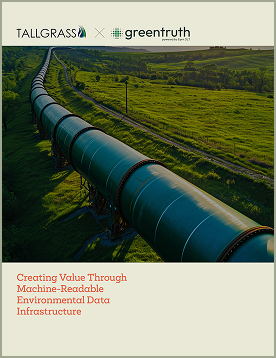
Tallgrass Case Study

Creating Value Through Machine-Readable Environmental Data Infrastructure

Tallgrass deployed Greentruth’s machine-readable data layer across the REX pipeline to preserve batch-level emissions data through comingled interstate flow without changing physical operations.

Tallgrass Case Study

As a result, verified, delivery-specific carbon intensity data and transferable environmental attributes became visible, accessible, and transactionable across the entire ecosystem—producers, buyers, marketers, and Tallgrass alike.

Continue Reading

You've reached the end of the preview.

Please fill out the form to download the case study.

Greentruth logo

Access Request

Create an Account or Sign in to Continue

A Greentruth account is required to access the MCP request form.